Guide operators through material weighing and dispensing with built-in accuracy checks, linked directly to the batch record for full raw-material traceability.

Get 1 Month Free Trial on DMS & LMS |
KOŚA eBR is an electronic batch record system that replaces paper MBRs with a validated, workflow-driven digital record — capturing materials, equipment, personnel, and process data in real time. It’s the electronic batch record system that pharmaceutical organisations rely on for reducing review times, ensuring data integrity, and faster batch disposition while always remaining compliant with 21 CFR Part 11 & EU GMP Annex 11 — the standard electronic batch records pharmaceutical manufacturers are increasingly expected to meet during inspections.
From error-prone paperwork to right-first-time, compliant batch release.
Trusted by manufacturing & quality teams in pharma, biotech & medical devices
PharmaCorp
BioGenex
MediLabs
CuraVita
NovaPharm
Electronic batch records
An electronic batch record, pharma teams rely on replaces the paper master batch record with a validated, digital equivalent capturing every material, piece of equipment, operator action, and in-process result as a batch moves through production. Pharmaceutical electronic batch records exist so that quality personnel can confirm SOPs, critical quality attributes, and critical process parameters were followed, and so that deviations are captured and investigated the moment they happen rather than discovered days later during a paper review. A master batch record (MBR) defines the recipe; electronic batch records document what happened, execution by execution. Get either piece wrong and the electronic batch record system stops being trustworthy at exactly the moment an inspector needs it to be.
Faster review
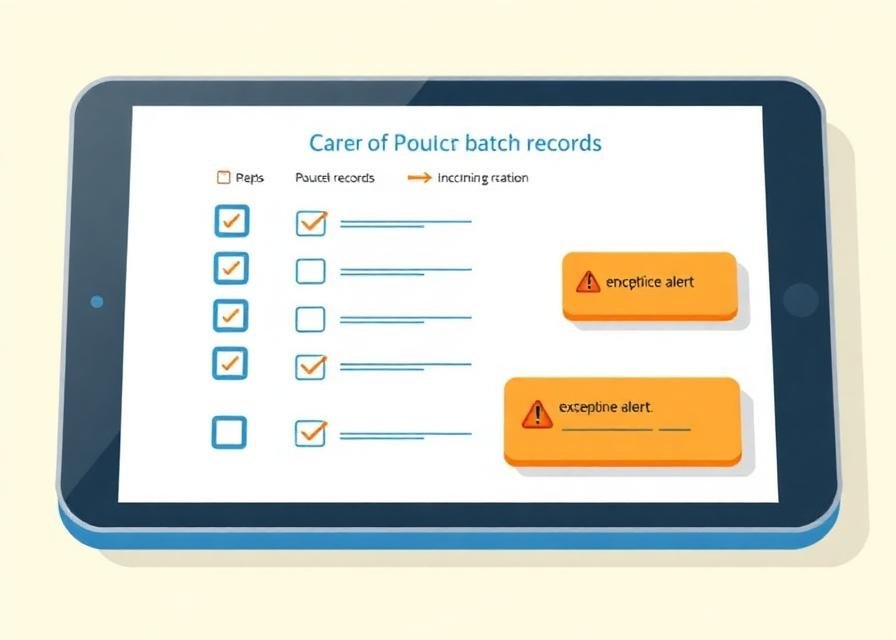
Review-by-exception surfaces only true deviations, so QA spends its time on real risk instead of re-checking passing data.
Rapid deployment
A complete IQ/OQ package cuts validation cycles, shortening go-live by months without cutting corners on compliance.
Integration
Connects natively with ERP, QMS, LIMS, and shop-floor devices, no rip-and-replace, no added infrastructure.
Inside the record
Although the specific format differs from organisation to organisation, the components of a pharmaceutical electronic batch record generally consist of the following common components, regardless of the medium it is being presented on, including a PDF, live dashboard for real-time release, or queryable table for R&D purposes:
Cross-functional alignment
Electronic batch records only pay off when every function trusts the same record. Here’s how KOŚA eBR aligns quality, manufacturing, and leadership:
Move from full-record review to review-by-exception, without losing oversight.
Guide operators through each step with built-in checks that catch errors as they happen.
Keep every batch defensible, long after it has shipped.
See batch performance and compliance risk before they become a release delay.
Key capabilities
KOŚA eLog is structured around the capabilities that separate real elogbook software from a digitised spreadsheet — configurability, traceability, and accessibility built into every template.
Real-time, automated tracking of materials, equipment & process parameters — no manual transcription.
QA reviews flagged deviations only, not entire records, shortening approval cycles.
Approvals, routing & permissions tailored to your process, by role and by site.
21 CFR Part 11 & EU Annex 11-compliant sign-offs embedded at every workflow step.
Master batch records that adapt to product changes without re-validation overhead.
Execute and review batch steps securely from any device, on or off the line.
Live production and compliance dashboards for audits and continuous improvement.
Direct integration with sensors and smart devices for accurate, real-time data.
Automatically flags discrepancies for QA, cutting manual review to the entries that actually need it.
Hands-free entry capture for operators working in gowned or hands-busy environments.
One-click, audit-ready report exports without manual compilation.
Multiple users can work the same logbook simultaneously, in-document, without version conflicts.
Modular add-ons
KOŚA eBR goes beyond batch documentation, connecting to Weigh & Dispense and Manufacturing Analytics & OEE for complete process visibility on the same platform.
Guide operators through material weighing and dispensing with built-in accuracy checks, linked directly to the batch record for full raw-material traceability.
Layer real-time line performance and equipment-efficiency dashboards on top of your batch data — no separate system, no duplicate entry.
Data integrity & compliance
Electronic batch records carry the same regulatory weight as their paper predecessors — so KOŚA eBR is engineered against the frameworks inspectors actually check.
21 CFR Part 11
Audit trails, access control & signature binding
21 CFR Part 210/211
Finished pharmaceutical manufacturing controls
EU GMP Annex 11
GMP-regulated manufacturing & quality activities
GAMP 5
Risk-based validation, including IQ / OQ / PQ
Implementation
GAMP 5 recognises two proven approaches to MES and eBR rollout. Pick the one that matches how your organisation scales:
Implement one unit operation, say, Weigh & Dispense, across every site first, then move to the next operation. Builds a centre-of-excellence team fast and keeps each phase narrow.
Implement one product end-to-end across all its unit operations, then repeat for the next product. Delivers value faster per product, at the cost of more complex recipe authoring up front.
Week 1–2
MBR inventory, data-capture points & structured migration plan.
Week 3–5
Recipes, review-by-exception rules & e-signature routing configured to your SOPs.
Week 6–8
IQ/OQ execution and user acceptance testing, ready for QA sign-off.
Week 9–10
Phased line-by-line go-live with operator training and hypercare support.
Get started
Book a 30-minute walkthrough and see how an electronic batch record system built for pharma can shorten your review cycles — tailored to your recipes, your lines, and your next audit.
21 CFR PART 11 · EU ANNEX 11 · GAMP 5 · cGMP · ALCOA+
FAQs